
Catalogue reference: US-73206
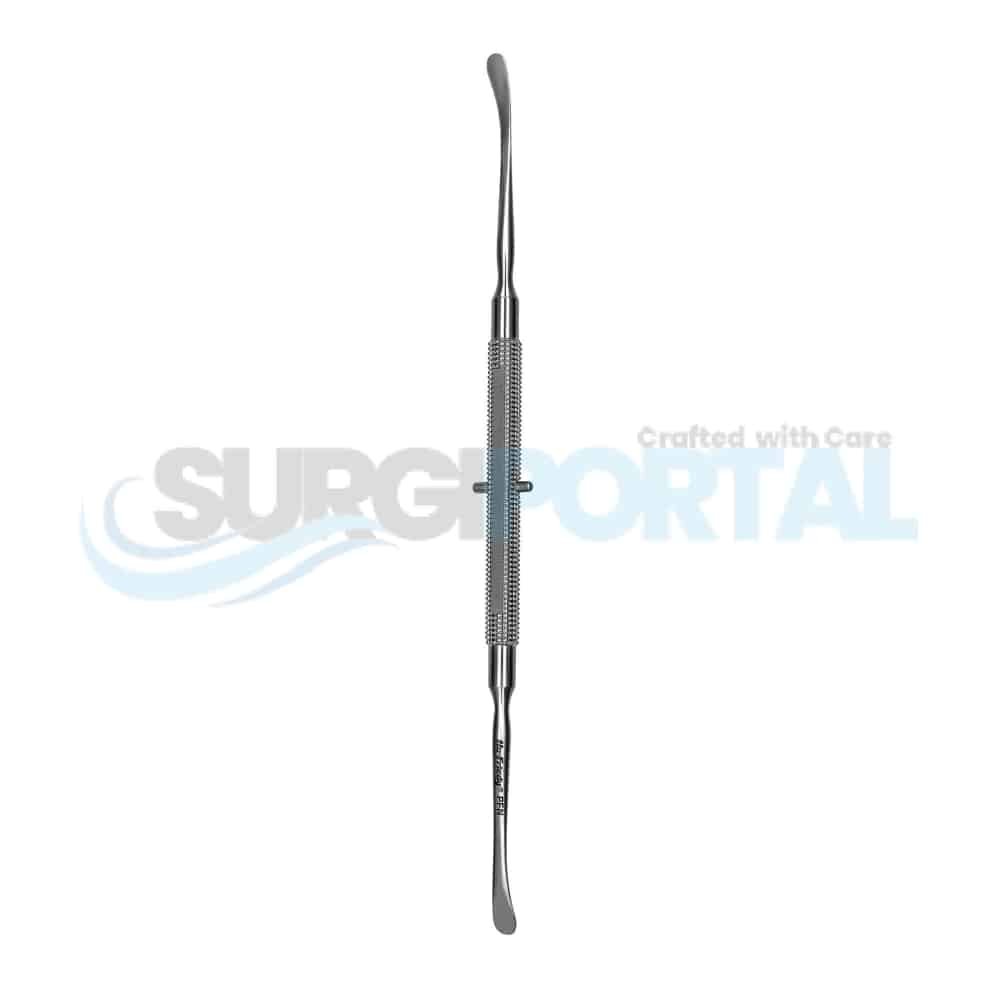
The Freer Nasal Periosteal is a specialized ENT surgical instrument designed for controlled elevation and manipulation of nasal mucoperiosteal and periosteal tissues. Its slender working profile supports precise dissection and tissue elevation during rhinologic and nasal surgical procedures.
Prefer Wise or bank transfer? Choose it at checkout.


The Freer Nasal Periosteal is a specialized surgical instrument designed for controlled elevation of nasal mucoperiosteal and periosteal tissues during ENT and rhinologic procedures. Its dedicated design supports precise tissue manipulation in the nasal surgical field, where access may be restricted and careful handling of delicate anatomical structures is essential. The instrument is particularly useful for clinicians requiring controlled subperiosteal or submucosal dissection during nasal and related procedures. Freer-pattern instruments are commonly associated with delicate nasal tissue manipulation because their working configuration allows the surgeon to approach the operative site with controlled movements. The Freer Nasal Periosteal can assist with elevation and separation of tissue from underlying structures while maintaining appropriate tactile control. This makes it a useful instrument for procedures involving the nasal septum, nasal cavity, and adjacent structures, depending on the specific design and surgical technique. In septal and rhinologic surgery, controlled tissue elevation is an important part of establishing access to the underlying cartilage and bone. The Freer Nasal Periosteal can be used to assist with careful elevation of mucoperichondrial or mucoperiosteal tissue during appropriate surgical approaches. Its slender working profile is advantageous when working within confined anatomical spaces where a larger periosteal elevator may be difficult to position accurately. The instrument is designed with surgical handling and precision in mind. A suitable handle provides the clinician with a stable grip, while the working end facilitates controlled advancement and tissue elevation. Maintaining accurate instrument positioning is especially important in nasal surgery because delicate mucosal tissues and underlying anatomical structures require careful manipulation. Depending on the manufacturer and configuration, the Freer Nasal Periosteal may be manufactured from high-quality medical-grade stainless steel. Surgical stainless steel is commonly selected for reusable ENT instruments because it offers strength, durability, corrosion resistance, and compatibility with established cleaning and sterilization procedures. The exact material grade, surface finish, dimensions, and working-end configuration should be confirmed according to the manufacturer’s product specifications. Potential applications include nasal septal procedures, rhinologic surgery, subperiosteal tissue elevation, mucoperichondrial flap elevation, and other ENT procedures requiring controlled nasal tissue manipulation. The specific use depends on the working-end configuration and the surgeon’s preferred technique. It can be incorporated into ENT instrument sets alongside nasal specula, elevators, forceps, scissors, suction instruments, and other rhinologic surgical tools. For reusable instruments, appropriate cleaning and sterilization are essential for maintaining instrument performance and supporting infection-control practices. After use, the Freer Nasal Periosteal should be cleaned promptly according to the manufacturer’s validated instructions. Biological residues should be removed before sterilization, and the working end should be inspected for bending, surface damage, corrosion, or other abnormalities. Proper handling and storage can help preserve the instrument’s precision and service life. The Freer Nasal Periosteal provides a dependable solution for clinicians performing delicate nasal and ENT procedures that require controlled tissue elevation and precise surgical access. Its specialized profile, durable construction, and practical handling characteristics make it a valuable addition to professional rhinologic and nasal surgery instrument sets. Key Features Freer-pattern nasal periosteal elevator for ENT surgery Designed for controlled nasal tissue and periosteal elevation Suitable for delicate mucoperichondrial flap elevation Useful in nasal septal and rhinologic procedures Slender working profile supports access within confined nasal anatomy Facilitates controlled subperiosteal and submucosal tissue manipulation Designed for precise surgical handling and tactile control Suitable for professional ENT and nasal surgery instrument sets Commonly manufactured from durable medical-grade surgical material Corrosion-resistant construction supports repeated clinical processing Suitable for cleaning and sterilization when supplied as reusable Designed for dependable performance during delicate nasal procedures Product Specifications Specification Details Product Name Freer Nasal Periosteal Instrument Type Nasal Periosteal Elevator Pattern Freer Primary Function Nasal tissue and periosteal elevation Applications ENT, nasal, septal, and rhinologic surgery Working Profile Slender precision surgical working end Tissue Application Mucoperichondrial and mucoperiosteal tissue Design Controlled tissue elevation configuration Material Medical-grade surgical material; verify manufacturer specification Reusable Depending on product configuration Sterilization Follow manufacturer-validated sterilization instructions Intended Users Qualified ENT and surgical professionals FAQs What is a Freer Nasal Periosteal used for? The Freer Nasal Periosteal is used for controlled elevation and manipulation of nasal mucoperiosteal and mucoperichondrial tissues during ENT and rhinologic surgery. Can the Freer Nasal Periosteal be used during septal surgery? Yes. Freer-pattern nasal elevators are commonly used to assist with tissue elevation during appropriate nasal septal surgical procedures. What is a nasal periosteal elevator? A nasal periosteal elevator is a surgical instrument designed to elevate and separate nasal soft tissue, mucoperiosteum, or periosteum from underlying cartilage and bone. Why is a slender working profile useful in nasal surgery? A slender profile can provide improved access and maneuverability within confined nasal anatomical spaces, supporting controlled tissue manipulation. What material is a Freer Nasal Periosteal made from? Reusable ENT periosteal instruments are commonly manufactured from medical-grade stainless steel because of its strength, durability, corrosion resistance, and suitability for sterilization. Is the Freer Nasal Periosteal reusable? If supplied as a reusable instrument, it should be properly cleaned, inspected, and sterilized according to the manufacturer’s validated reprocessing instructions. How should a Freer Nasal Periosteal be maintained? The instrument should be cleaned after use, thoroughly inspected for damage or deformation, and sterilized using a validated method specified by the manufacturer and healthcare facility.
| Instrument name | Freer Nasal Periosteal |
|---|---|
| Catalogue reference | US-73206 |
| Category | Dental Instruments |
Worldwide Hospital Handling: Orders are hand-calibrated, ultrasonically passivated to ASTM A967 standards, and dispatched within 24–48 hours directly from our own manufacturing facility. Priority air express delivery via DHL and FedEx includes complete Certificate of Conformity and material mill test documentation.
Autoclave Guarantee: 100% steam autoclave validated (134°C / 273°F). If any instrument exhibits pitting, jaw misalignment, or micro-structural defect, it is replaced unconditionally under our 30-Day Hospital Return & Exchange Guarantee.
Worldwide shipping is $50 USD per order below $500 USD, and free on orders of $500 USD or more. The final shipping charge is shown at checkout. Returns are accepted within 30 days of delivery for unused instruments in their original packaging.

Direct wholesale export quotes delivered to your email within 24 hours.