
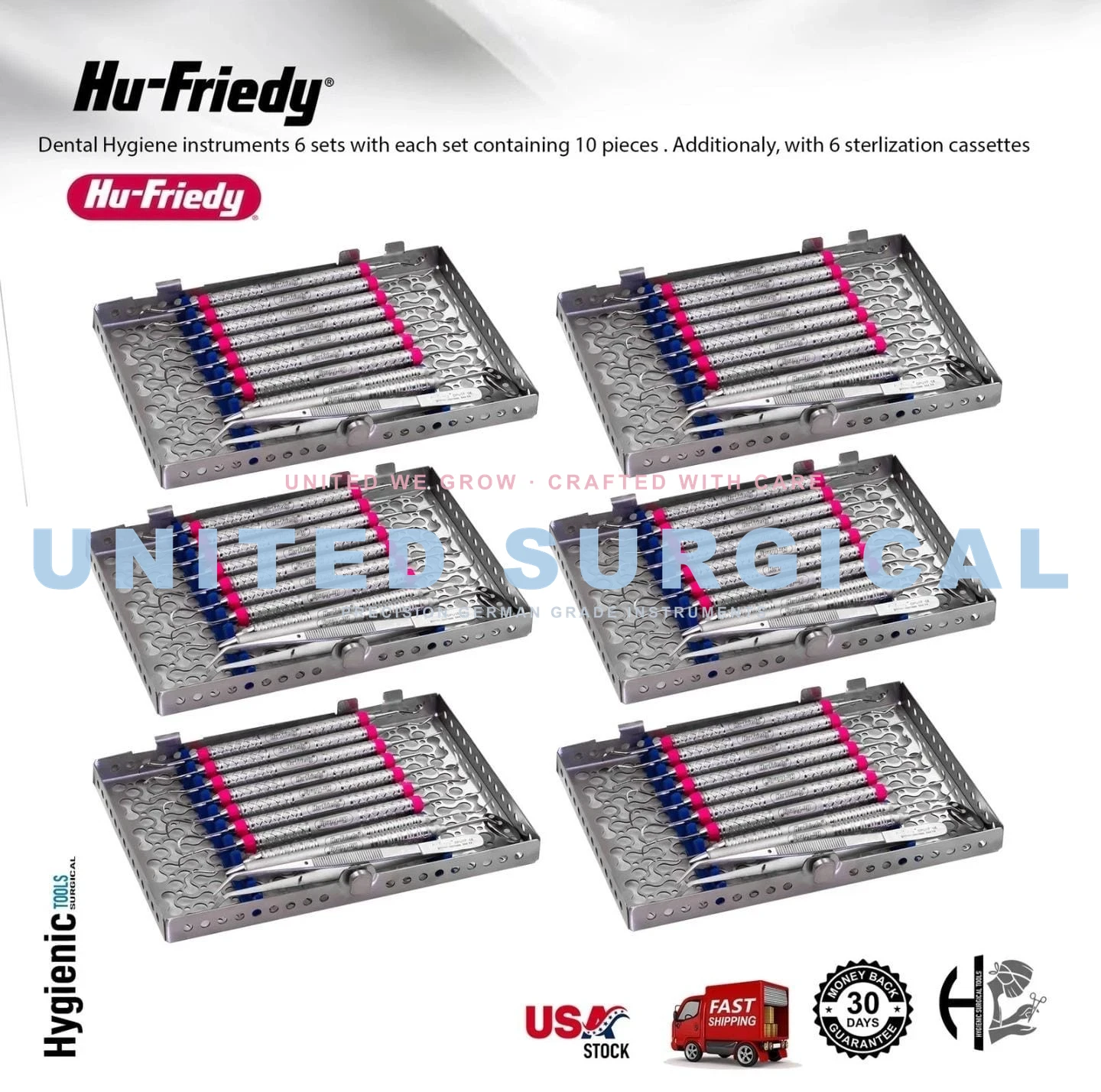

Catalogue reference: US-69381
The Krejci Posterior Composite Instrument is a precision restorative dental hand instrument designed for controlled placement, adaptation, and sculpting of composite materials. Its specialized working profile supports efficient anatomical contouring during posterior restorations.
Prefer Wise or bank transfer? Choose it at checkout.


The Krejci Posterior Composite Instrument is a specialized restorative dental hand instrument designed for controlled manipulation, placement, adaptation, and sculpting of composite restorative materials during posterior dental procedures. Its dedicated working profile supports clinicians in developing functional anatomy and accurate contours when restoring posterior teeth. Posterior composite restorations require careful control of restorative material to reproduce occlusal anatomy, proximal contours, marginal ridges, and functional contacts. The Krejci Posterior Composite Instrument provides a precision-oriented solution for manipulating composite in these clinically demanding areas. Its working profile allows the clinician to guide material into the desired location and progressively develop the shape of the restoration. During a direct posterior restoration, composite is commonly placed in increments and adapted to the prepared cavity. The Krejci instrument can assist with spreading and compressing appropriate composite material while maintaining controlled contact with the restoration. It can also support preliminary anatomical sculpting before polymerization and subsequent finishing. The posterior working environment can be more confined than anterior surfaces, particularly around proximal boxes and occlusal anatomy. A dedicated posterior composite instrument provides the clinician with an appropriately designed working end for navigating these areas. Controlled finger movements and proper instrument angulation allow the operator to refine restorative material without unnecessarily disturbing previously adapted increments. The Krejci Posterior Composite Instrument can be incorporated into restorative dentistry, operative dentistry, and posterior composite instrument sets. It may be used alongside composite placement instruments, condensers, carving instruments, contact-forming tools, finishing instruments, and polishing systems to create a complete restorative workflow. A key advantage of manual composite instrumentation is tactile feedback. The clinician can feel how the material responds as it is adapted and shaped. This can be particularly useful when developing occlusal morphology and establishing transitions between the restorative material and surrounding tooth structure. The instrument’s handle supports secure and controlled manipulation. A stable grip allows the clinician to regulate pressure and perform fine movements when shaping cusps, grooves, marginal ridges, and other anatomical features. Proper control is important because excessive pressure can displace composite or unintentionally alter the restoration’s intended morphology. Professional dental composite instruments are generally produced from durable, corrosion-resistant materials suitable for repeated clinical use. The exact construction, alloy, finish, and working-end characteristics may vary by manufacturer and model. Product-specific material specifications should be confirmed against the manufacturer’s documentation. The working end should be protected from excessive mechanical stress. Composite instruments should not be used for prying, levering, or manipulating materials beyond their intended application. Regular inspection can help identify surface damage, deformation, corrosion, or other defects that could interfere with precise composite manipulation. After each procedure, uncured composite should be removed from the instrument before it polymerizes. Hardened composite may be significantly more difficult to remove and can affect the working surface. Cleaning should be performed according to validated manufacturer instructions and the dental practice’s infection-control procedures. Following cleaning, the Krejci Posterior Composite Instrument should be thoroughly rinsed and dried as appropriate, inspected, and sterilized using a validated method compatible with the instrument. The working end should be protected during sterilization, handling, and storage to maintain its original geometry. Proper maintenance helps preserve the instrument’s performance over repeated clinical use. Instruments showing significant wear, deformation, corrosion, or surface damage should be evaluated before reuse. The Krejci Posterior Composite Instrument provides restorative clinicians with a practical solution for controlled posterior composite manipulation. Its precision-focused working profile and ergonomic handling support adaptation, sculpting, and anatomical contouring during direct posterior restorations. For dental professionals looking for a specialized posterior composite instrument , the Krejci design can complement a modern restorative instrument collection. It supports efficient handling of composite while allowing clinicians to develop functional posterior anatomy with controlled manual movements. Key Features Krejci Posterior Composite Instrument Designed for posterior composite restorations Supports composite placement and adaptation Facilitates controlled posterior anatomical sculpting Useful for occlusal contour development Supports shaping of cusps, grooves, and marginal ridges Suitable for incremental composite techniques Provides tactile feedback during restorative manipulation Ergonomic handle supports controlled finger movements Durable professional dental instrument construction Suitable for operative and restorative dentistry Reusable when processed according to validated instructions Product Specifications Specification Details Product Name Krejci Posterior Composite Instrument Instrument Type Composite Restorative Instrument Pattern Krejci Primary Application Posterior Restorative Dentistry Primary Function Composite Placement and Sculpting Secondary Functions Adaptation and Contouring Clinical Use Direct Posterior Restorations Working Profile Posterior Composite Shaping Anatomical Applications Occlusal and Proximal Contouring Handle Ergonomic Dental Hand Instrument Construction Professional Dental Instrument Material Configuration Hand Instrument Reusable Yes, when processed according to validated instructions Sterilization According to applicable manufacturer instructions Intended Users Dental Professionals FAQs 1. What is the Krejci Posterior Composite Instrument used for? It is designed for controlled placement, adaptation, sculpting, and contouring of composite during posterior restorative procedures. 2. Can this instrument be used for posterior composite restorations? Yes. Its specialized working profile is intended to support appropriate direct composite procedures on posterior teeth. 3. What posterior anatomy can be shaped with this instrument? It can assist with developing appropriate occlusal contours, cusps, grooves, marginal ridges, and other restorative anatomical features. 4. Is the Krejci Posterior Composite Instrument suitable for incremental layering? Yes. It can support adaptation and shaping of composite increments during appropriate posterior layering techniques. 5. Why use a dedicated posterior composite instrument? A posterior-specific instrument provides controlled access and manipulation for the occlusal and proximal anatomy commonly encountered during posterior restorations. 6. Does the instrument help with composite adaptation? Yes. Its working profile can assist clinicians in adapting restorative material to appropriate cavity surfaces and previously placed composite increments. 7. How should the Krejci Posterior Composite Instrument be cleaned? Composite residue should be removed promptly, followed by cleaning, rinsing as appropriate, drying, inspection, and sterilization according to validated manufacturer instructions. 8. How can the instrument be maintained? Avoid excessive force and abrasive contact, prevent composite from curing on the working end, inspect regularly for damage, and store the instrument properly after sterilization.
| Instrument name | Krejci Posterior Composite Instrument |
|---|---|
| Catalogue reference | US-69381 |
| Category | Dental Instruments |
Worldwide Hospital Handling: Orders are hand-calibrated, ultrasonically passivated to ASTM A967 standards, and dispatched within 24–48 hours directly from our own manufacturing facility. Priority air express delivery via DHL and FedEx includes complete Certificate of Conformity and material mill test documentation.
Autoclave Guarantee: 100% steam autoclave validated (134°C / 273°F). If any instrument exhibits pitting, jaw misalignment, or micro-structural defect, it is replaced unconditionally under our 30-Day Hospital Return & Exchange Guarantee.
Worldwide shipping is $50 USD per order below $500 USD, and free on orders of $500 USD or more. The final shipping charge is shown at checkout. Returns are accepted within 30 days of delivery for unused instruments in their original packaging.

Direct wholesale export quotes delivered to your email within 24 hours.