
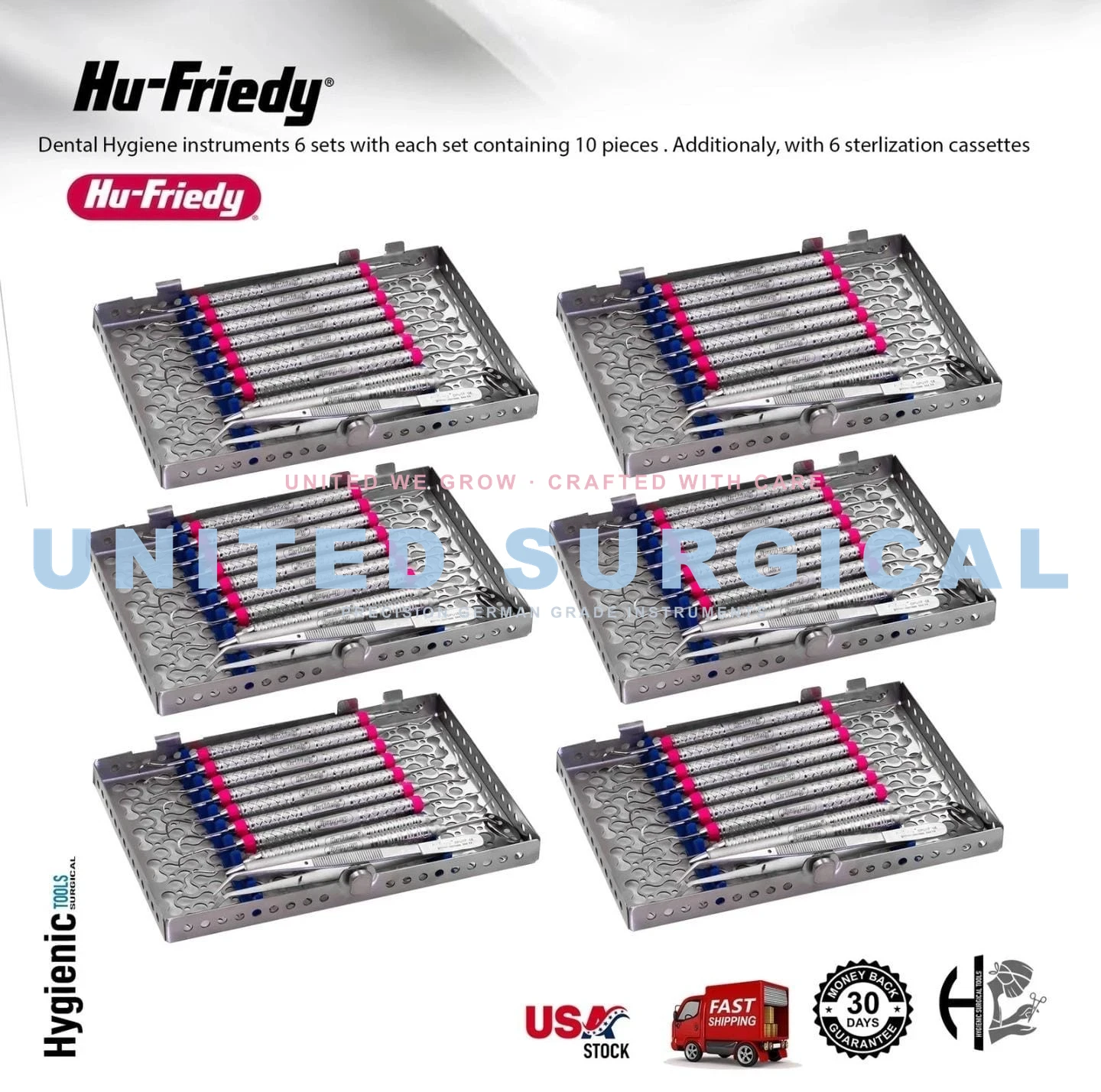

Catalogue reference: US-69665
The Mini 4 Goldstein Flexi-Thin Composite Instrument is a precision restorative hand instrument designed for controlled manipulation of composite materials in confined intraoral areas. Its thin, flexible working profile supports detailed adaptation, sculpting, and contour refinement.
Prefer Wise or bank transfer? Choose it at checkout.


The Mini 4 Goldstein Flexi-Thin Composite Instrument is a specialized dental restorative instrument designed for precise placement, adaptation, sculpting, and contouring of composite restorative materials. Its Mini #4 configuration and Flexi-Thin working profile provide clinicians with a compact instrument option for detailed restorative procedures where access and control are important. Composite restorations often require careful manipulation of material in small or anatomically complex areas. A precision composite instrument allows the clinician to position and shape restorative material incrementally while maintaining tactile feedback. The Mini 4 Goldstein Flexi-Thin Composite Instrument is designed to support these detailed movements while providing a slim working end suitable for controlled intraoral access. The Mini design offers a compact working profile that can be useful when working around small anatomical features, proximal regions, margins, or other restricted areas. Its reduced working size helps the clinician make localized adjustments without unnecessarily disturbing adjacent composite or tooth structure. The Flexi-Thin working profile is designed with a thin, flexible configuration. This allows the instrument to reach areas where a broader or more rigid working end may be difficult to position. Controlled flexibility can also help the working end follow selected contours during composite adaptation and sculpting. The instrument can be used for appropriate direct restorative procedures involving composite materials. It may assist with placing and spreading composite, adapting increments to cavity surfaces, refining contours, and developing preliminary anatomy before polymerization. It can complement other restorative tools such as composite condensers, contact-forming instruments, carvers, and finishing instruments. The precision working profile is particularly useful when clinicians need to make small adjustments to restorative material. Controlled strokes can help refine the transition between composite and tooth structure and contribute to the development of appropriate anatomical contours. The handle provides secure manual control during detailed procedures. Stable finger positioning allows the clinician to regulate pressure and guide the working tip accurately. Proper pressure control is especially important when using a thin instrument because excessive force can distort the working end or unnecessarily displace the composite. Professional composite instruments are generally manufactured from durable, corrosion-resistant dental or medical-grade materials. The exact alloy, finish, flexibility, dimensions, and working-end characteristics may vary by manufacturer and specific model. Product-specific technical details should always be verified against the manufacturer’s documentation. The thin working end should be handled carefully to preserve its geometry. It should not be used for prying, wedging, levering, or applications outside its intended restorative purpose. Regular inspection can help identify bending, deformation, scratches, corrosion, or other damage. Composite residue should be removed promptly following clinical use. Allowing restorative material to cure on the working surface can make cleaning more difficult and may affect subsequent instrument performance. Cleaning should follow validated manufacturer instructions and applicable dental infection-control procedures. After cleaning, the Mini 4 Goldstein Flexi-Thin Composite Instrument should be rinsed and dried as appropriate, inspected for residual material and damage, and sterilized using a validated process compatible with the instrument. Proper storage should protect the thin working end from contact with other instruments. Maintaining the working surface and geometry is essential for consistent performance. Instruments should be inspected before use and removed from service if significant deformation, corrosion, or other damage is identified. The Mini 4 Goldstein Flexi-Thin Composite Instrument offers dental professionals a precision-focused solution for detailed composite manipulation. Its compact Mini #4 profile, thin flexible design, and controlled handling make it a valuable addition to restorative and cosmetic dentistry instrument collections. Key Features Mini 4 Goldstein Flexi-Thin Composite Instrument Designed for precision composite manipulation Mini #4 working profile for detailed restorative work Flexi-Thin design provides a slim flexible working end Supports composite placement and adaptation Facilitates controlled sculpting and contouring Useful in confined intraoral areas Supports incremental composite restoration techniques Provides tactile control during restorative procedures Ergonomic handle supports precise finger positioning Durable professional dental instrument construction Reusable when processed according to validated instructions Product Specifications Specification Details Product Name Mini 4 Goldstein Flexi-Thin Composite Instrument Instrument Type Composite Restorative Instrument Pattern Goldstein Size Mini #4 Design Flexi-Thin Primary Function Composite Placement and Adaptation Secondary Functions Sculpting and Contouring Working Profile Thin / Flexible / Precision Primary Application Restorative Dentistry Clinical Use Direct Composite Procedures Suitable Areas Detailed and Confined Intraoral Areas Handle Ergonomic Dental Hand Instrument Construction Professional Dental Instrument Material Reusable Yes, when processed according to validated instructions Sterilization According to applicable manufacturer instructions Intended Users Dental Professionals FAQs 1. What is the Mini 4 Goldstein Flexi-Thin Composite Instrument used for? It is designed for precise placement, adaptation, sculpting, and contouring of composite restorative materials during appropriate dental procedures. 2. What is the benefit of the Mini #4 design? The compact working profile provides greater control when manipulating composite around small anatomical features and restricted intraoral areas. 3. What does Flexi-Thin mean? Flexi-Thin refers to a slim working profile with controlled flexibility, allowing detailed manipulation and adaptation of composite around selected contours. 4. Is this instrument suitable for anterior composite restorations? Yes. Its compact precision design can support appropriate anterior restorative procedures requiring detailed composite shaping and contouring. 5. Can it be used for posterior restorations? Yes. It may also be useful in posterior restorative procedures where a small, flexible working end is beneficial for accessing confined areas. 6. Does the instrument support composite layering? Yes. It can assist with adaptation and shaping of appropriate composite increments during incremental restorative techniques. 7. How should the Mini 4 Goldstein instrument be cleaned? Remove composite residue promptly, then clean, rinse as appropriate, dry, inspect, and sterilize according to validated manufacturer instructions. 8. How should the Flexi-Thin working end be protected? Avoid excessive bending, prying, levering, and impact against hard surfaces. Store the instrument carefully to prevent deformation of the thin working end.
| Instrument name | Mini 4 Goldstein Flexi-Thin Composite Instrument |
|---|---|
| Catalogue reference | US-69665 |
| Category | Dental Instruments |
Worldwide Hospital Handling: Orders are hand-calibrated, ultrasonically passivated to ASTM A967 standards, and dispatched within 24–48 hours directly from our own manufacturing facility. Priority air express delivery via DHL and FedEx includes complete Certificate of Conformity and material mill test documentation.
Autoclave Guarantee: 100% steam autoclave validated (134°C / 273°F). If any instrument exhibits pitting, jaw misalignment, or micro-structural defect, it is replaced unconditionally under our 30-Day Hospital Return & Exchange Guarantee.
Worldwide shipping is $50 USD per order below $500 USD, and free on orders of $500 USD or more. The final shipping charge is shown at checkout. Returns are accepted within 30 days of delivery for unused instruments in their original packaging.

Direct wholesale export quotes delivered to your email within 24 hours.