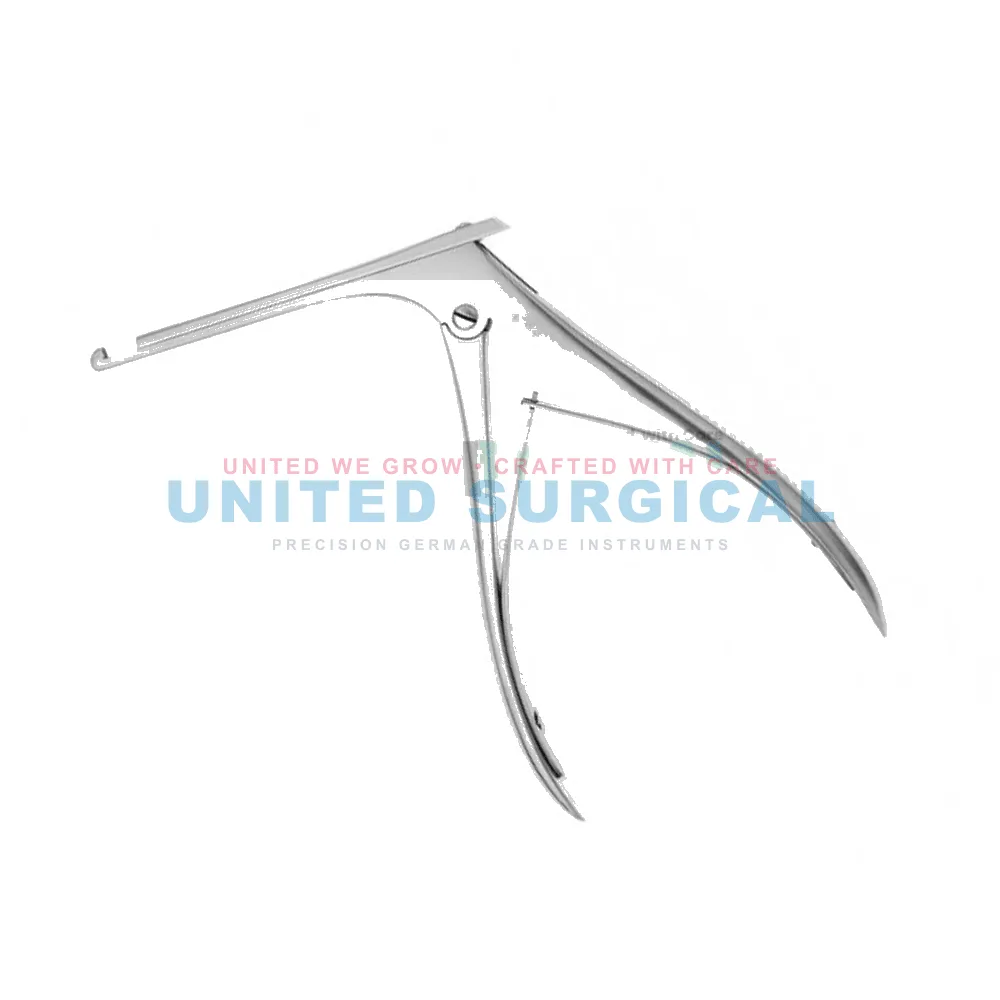
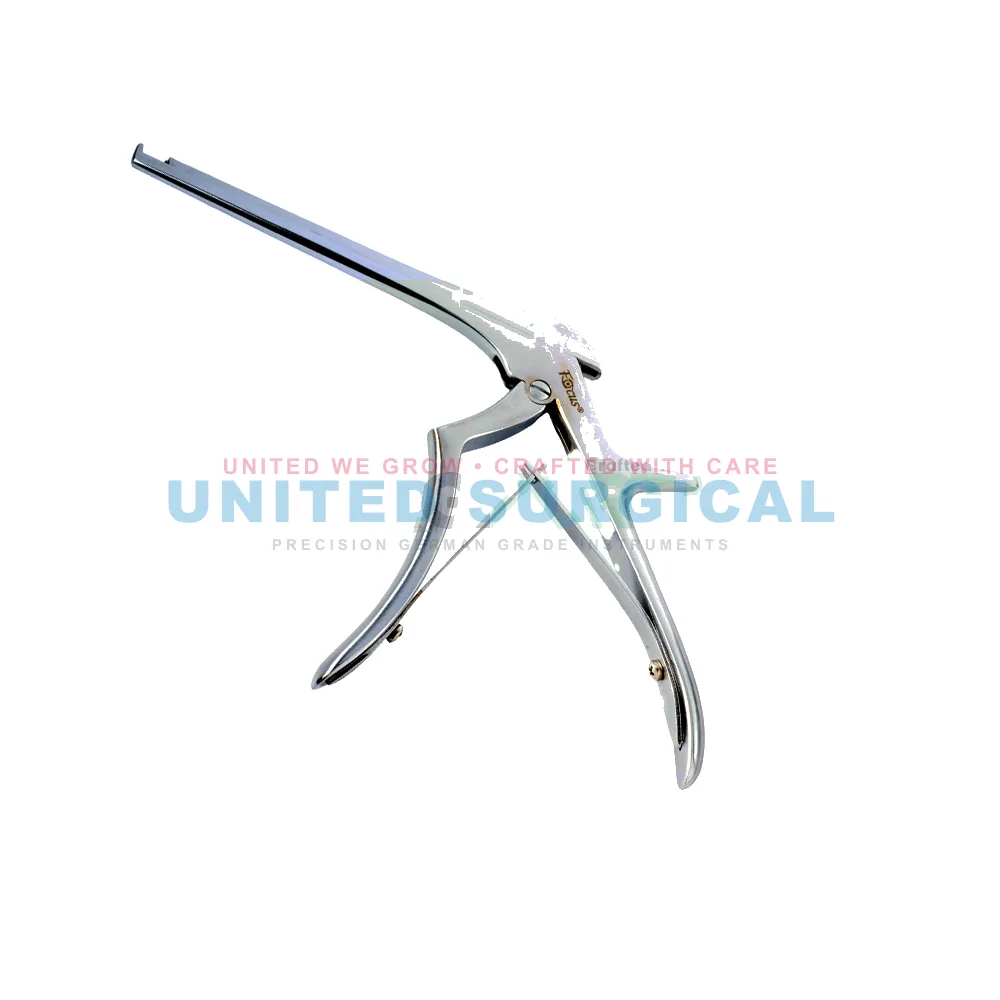
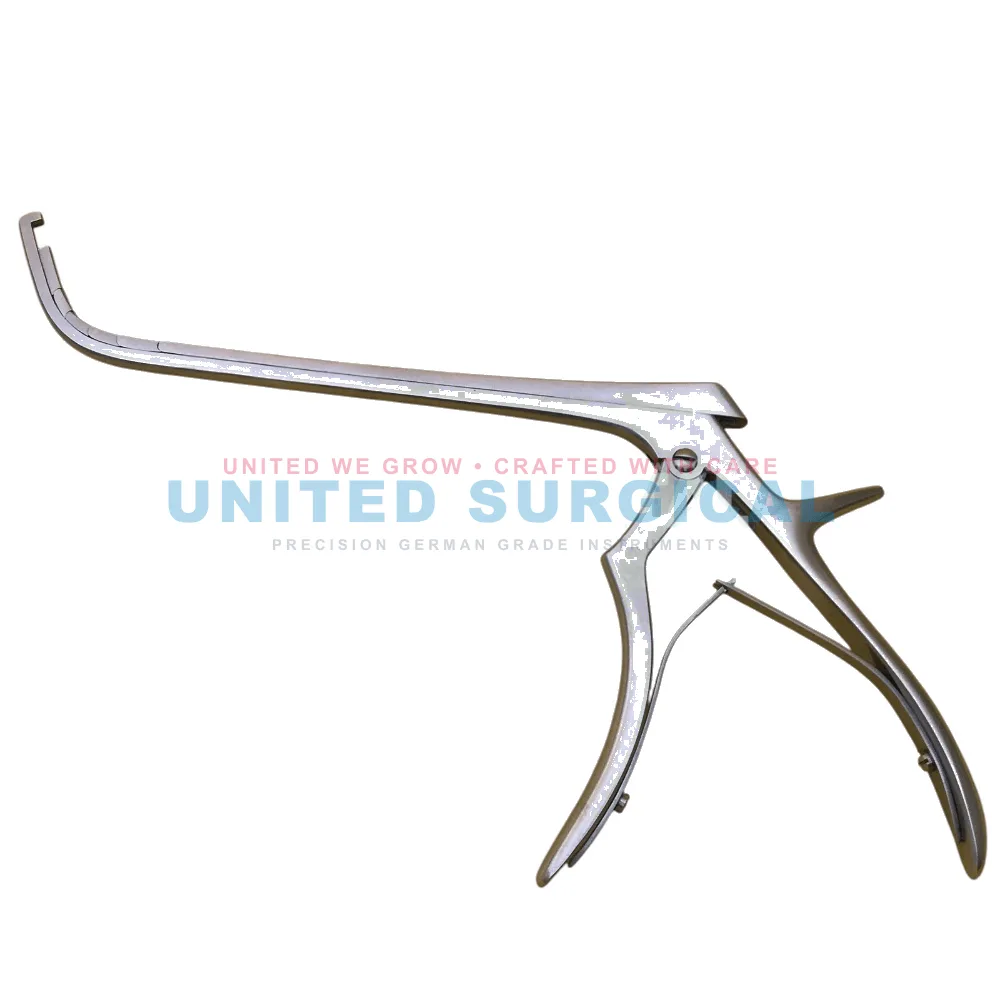
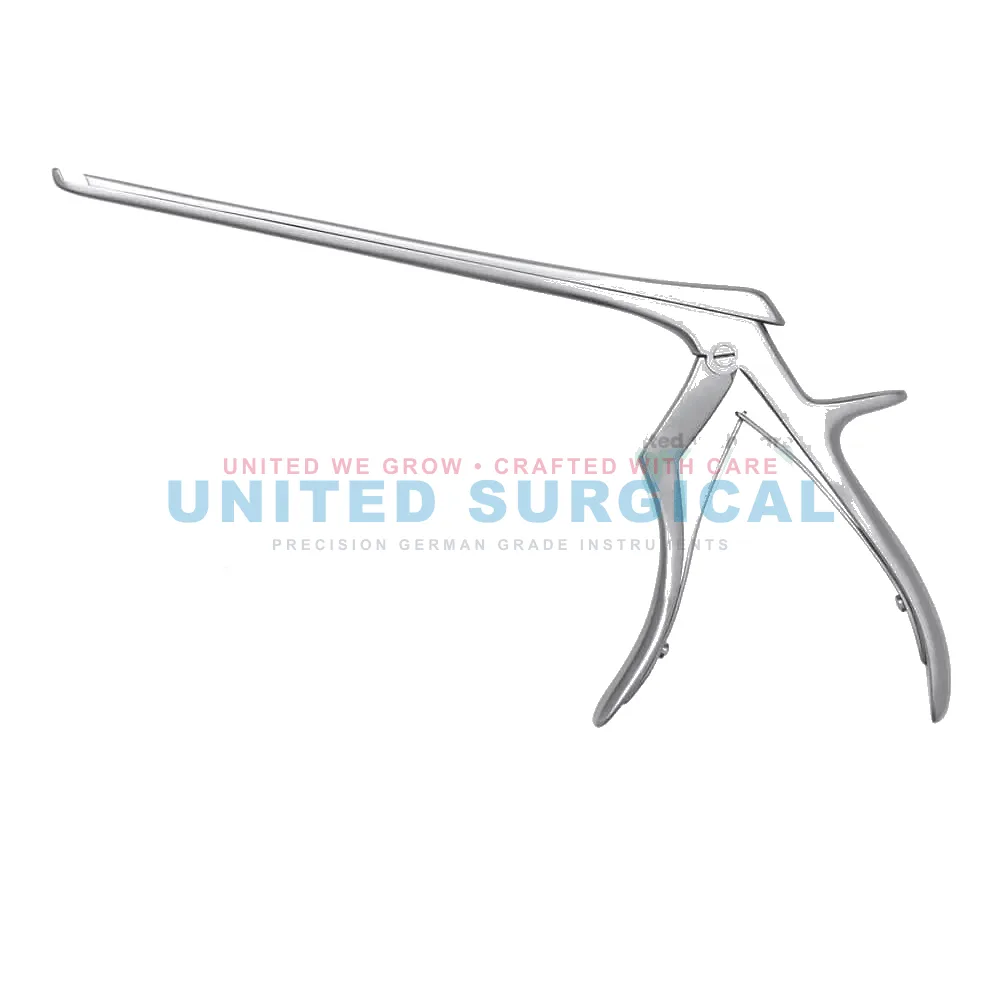
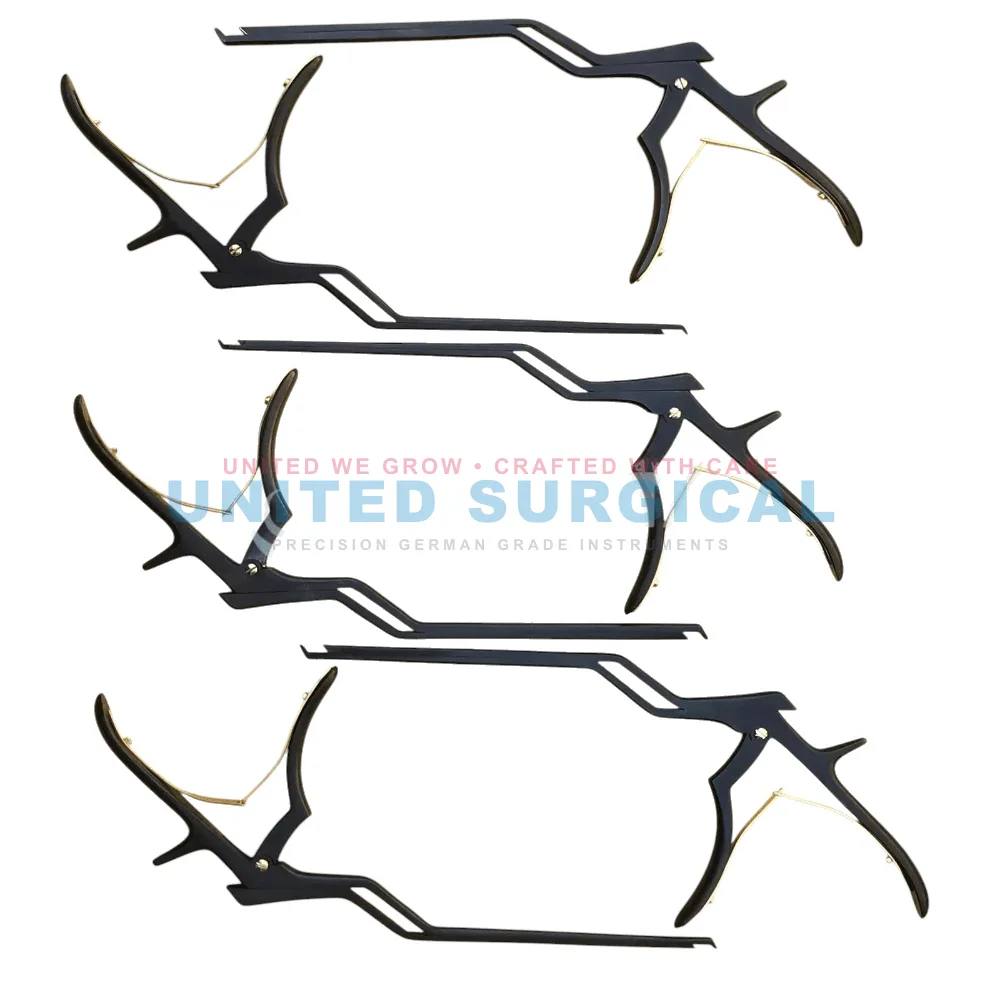
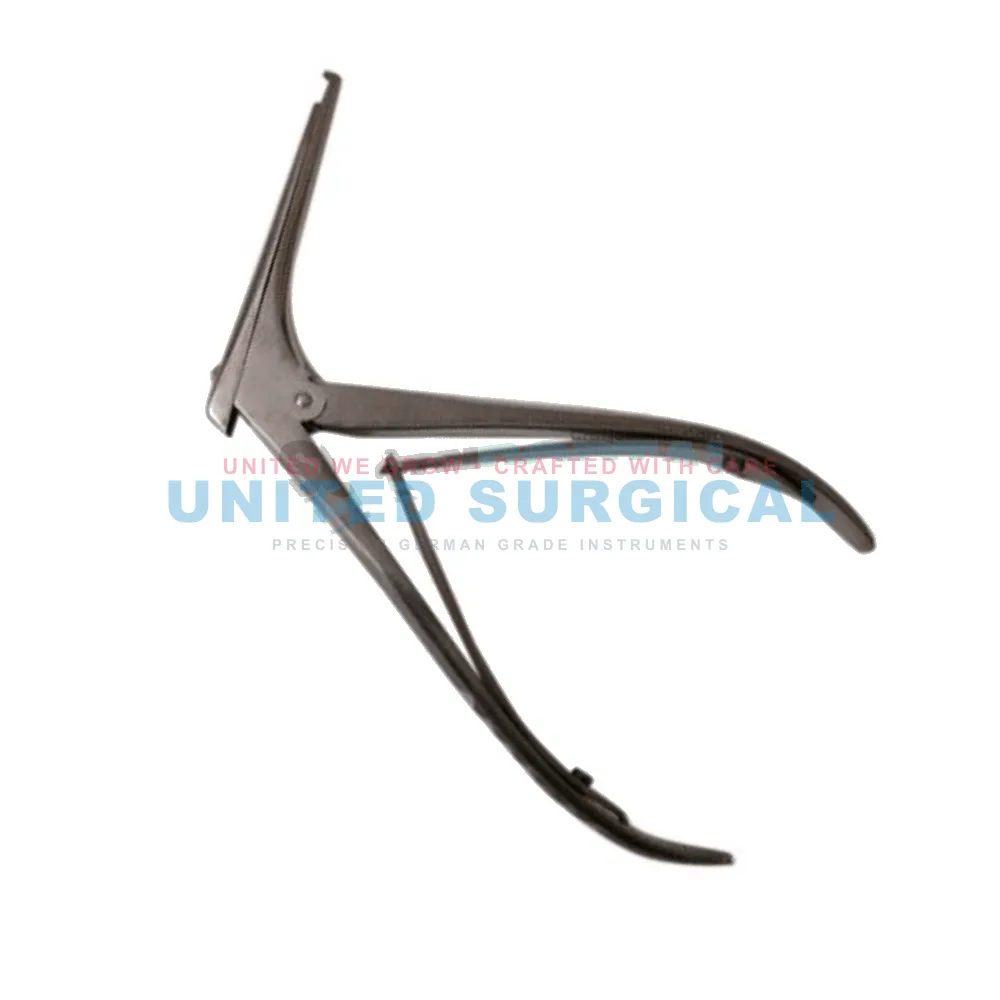
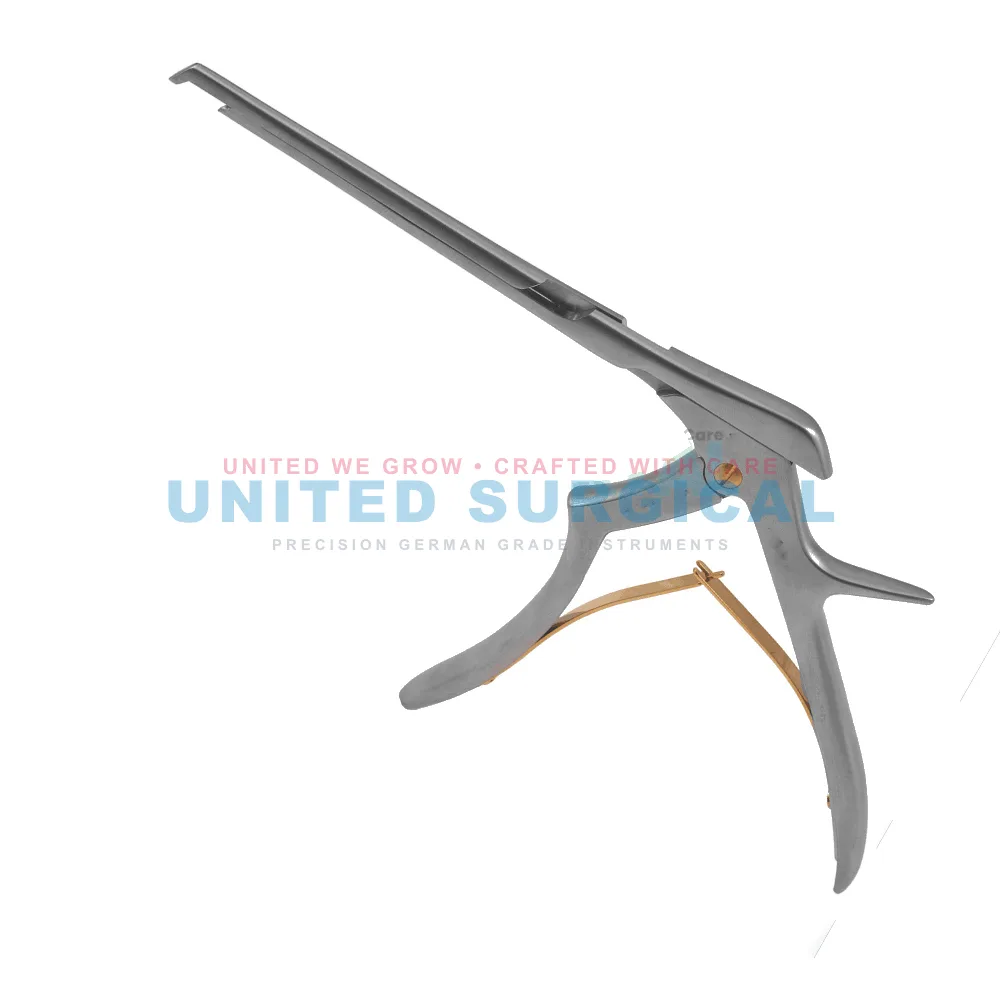
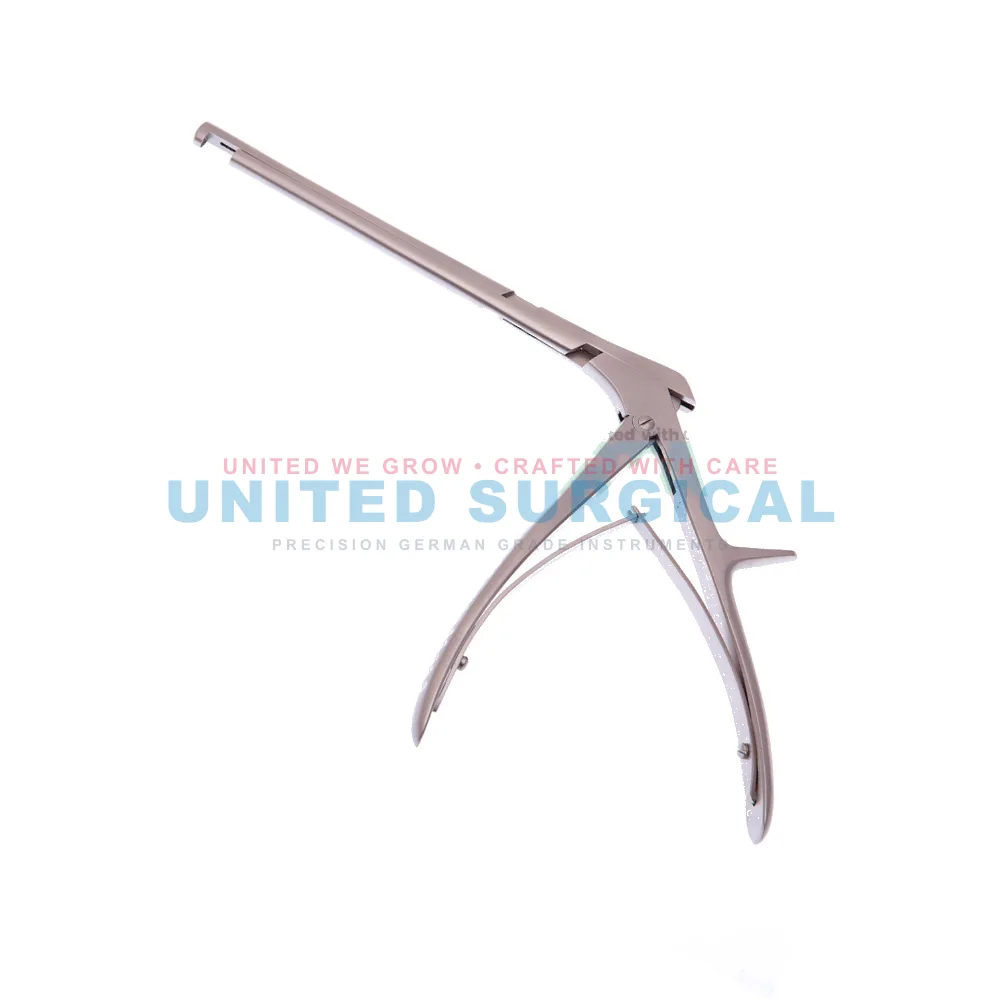
Most spine trays carry several bite sizes, so the surgeon can open wide first and then work finely near the nerve root. Check these points before you order:
Ejector models push bone fragments out of the jaw, so the tip doesn't need clearing between bites. Rotating and detachable models are easier to position and to clean.
| Procedure | Bite size | Angle | Length |
|---|---|---|---|
| Cervical foraminotomy | 1 – 2 mm | 40° up | 6″ – 7″ |
| Cervical laminectomy | 2 – 3 mm | 40° or 90° | 7″ |
| Lumbar decompression | 3 – 4 mm | 40° up | 8″ |
| Lumbar laminectomy | 5 – 6 mm | 40° or 90° | 8″ |
| Microscope / MIS approach | 2 – 4 mm | 40° up, bayonet | 8″ |
Typical selections. The final choice depends on the surgeon and the approach.
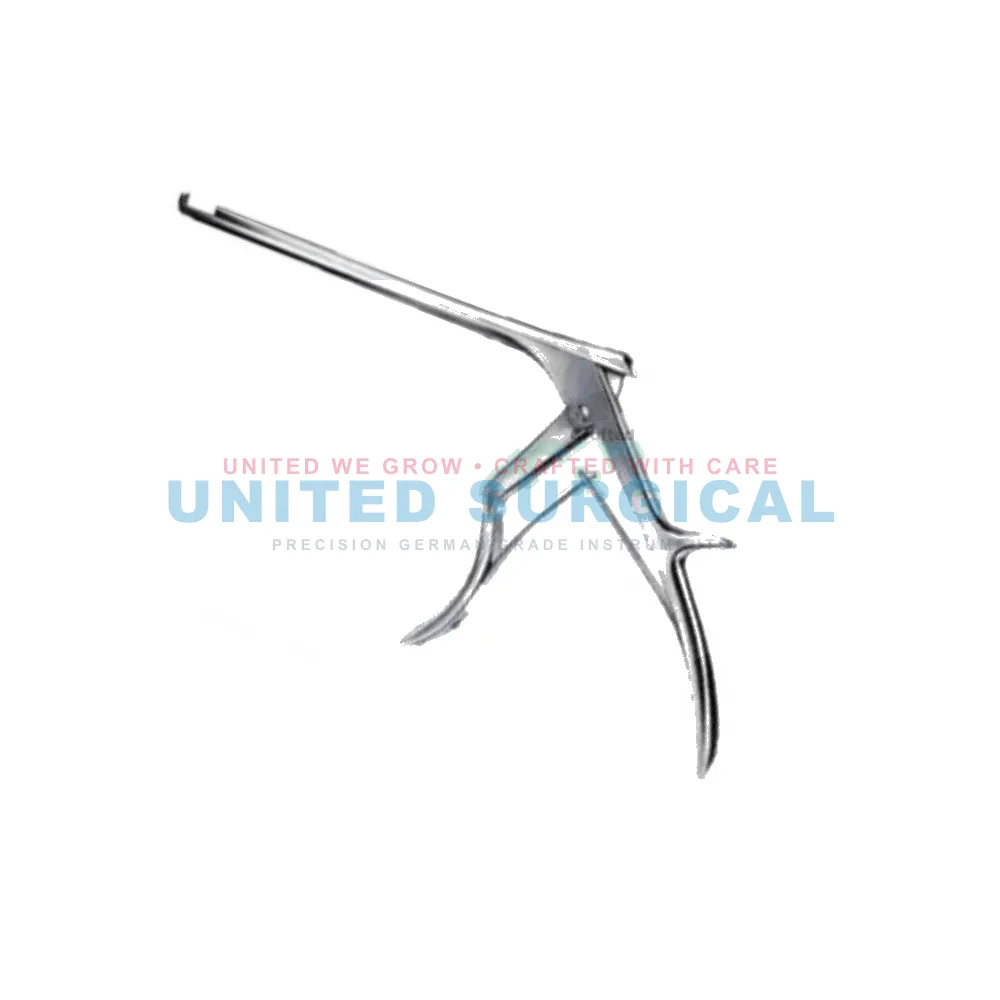
It is a punch-style bone cutter used in spine and neurosurgery to remove small pieces of lamina, bone spurs and ligamentum flavum, mainly during laminectomy, laminotomy, foraminotomy and spinal decompression.
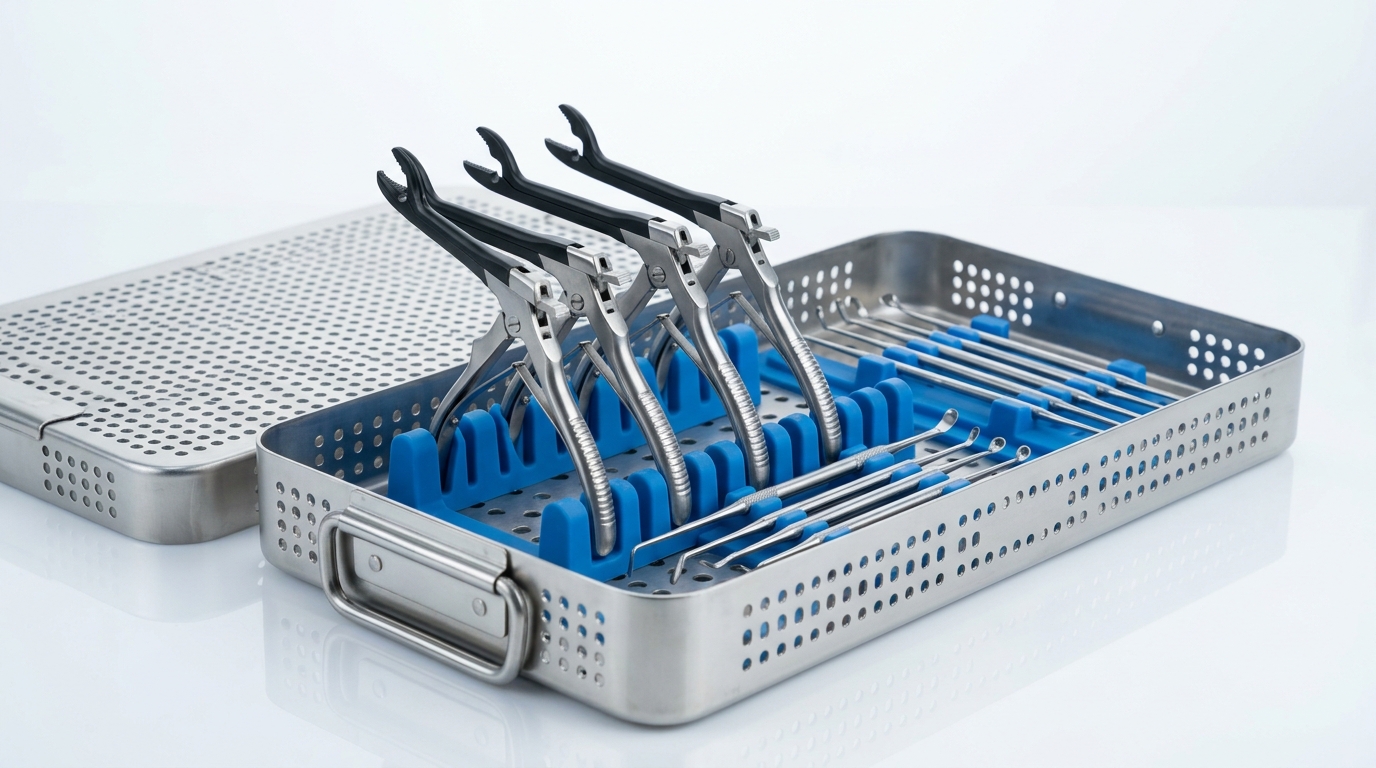
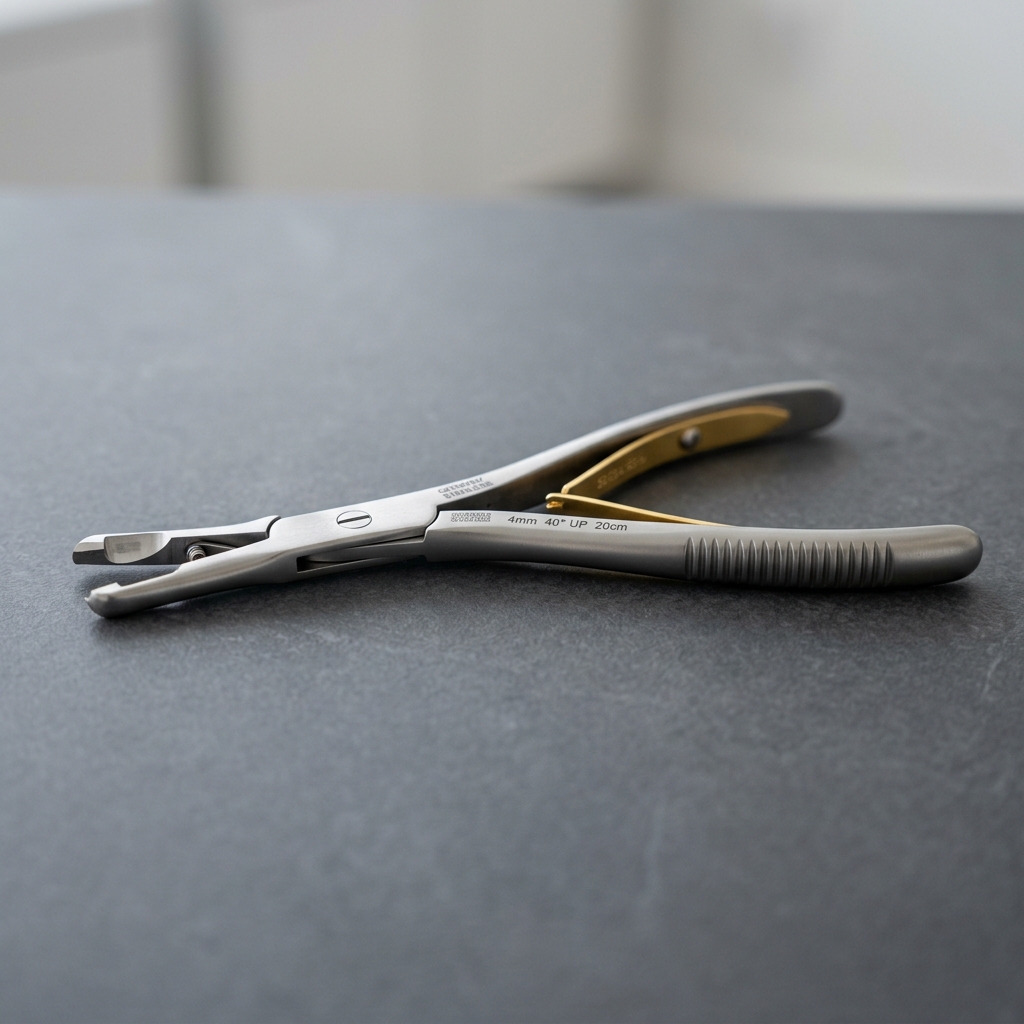
A common core set is 2, 3, 4 and 5 mm at 40° up-bite. Many hospitals add 1–1.5 mm micro-thin models for cervical work and a 6 mm for faster bone removal.
A 40° jaw is angled forward and suits most lumbar work. A 90° jaw cuts at a right angle to the shaft, which helps when working directly under the lamina.
Bayonet shafts are offset so the hand stays out of the surgeon's view, which is useful for microscope and minimally invasive work. Straight shafts are common for open procedures.
Flush the jaw and shaft straight after use, clean them according to the instructions for use, then steam autoclave. Detachable and ejector models are easier to clean thoroughly.
Yes. Kerrison rongeurs are available individually, in sets of 5–6 with a sterilization box, in bulk for tenders and distributors, and with laser-etched OEM branding.
Custom dimensions, ceramic coatings, hospital tender contracts, and sterilization tray sets manufactured to ASTM F899 standards.
Direct wholesale export quotes delivered to your email within 24 hours.